
If you are currently in the market for a compact crossover SUV, you are absolutely spoiled for choice. It takes something special to stand out from a crowd of evergreen favorites like the Honda CR-V, Toyota RAV4, and the always charming Subaru Forester. The Mazda CX-5 has always been good looking and great to drive, but small for some families. That changes with the all-new 2026 model, which is bigger, better looking, and loaded with new technology.
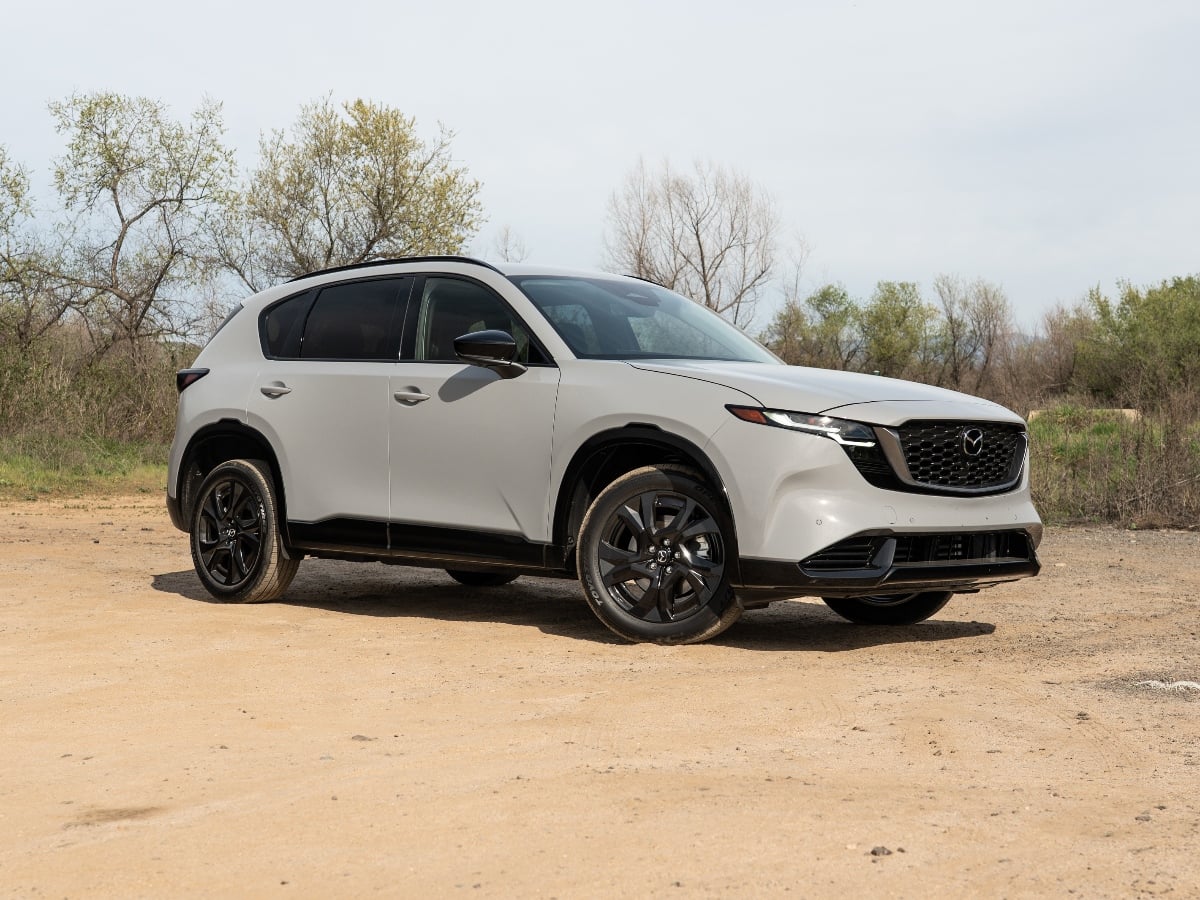
Photo: Tim Stevens
For 2026, the Mazda CX-5 gains 4.5 inches in length, making it a much roomier, more capable SUV than before. Its interior is completely rebooted as well, with the highlight being a new software experience powered by Google. Wrap all that in a familiar yet compelling design, and you have a great choice.
The new CX-5 is available in 2.5 S, 2.5 S Select, 2.5 S Preferred, 2.5 S Premium, and 2.5 S Premium Plus trim levels, with base prices ranging from the low $30,000s to around $40,000, including the destination charge.
For this 2026 CX-5 review, Mazda provided a test vehicle equipped with 2.5 S Premium Plus trim and optional Aero Gray Metallic paint. The test vehicle's manufacturer suggested retail price (MSRP) was $41,080, including the $1,495 destination charge to ship the crossover SUV from the Hiroshima, Japan, assembly plant to a local dealership. The price does not reflect any current rebates, incentives, or price adjustments since Mazda manufactured the test vehicle.
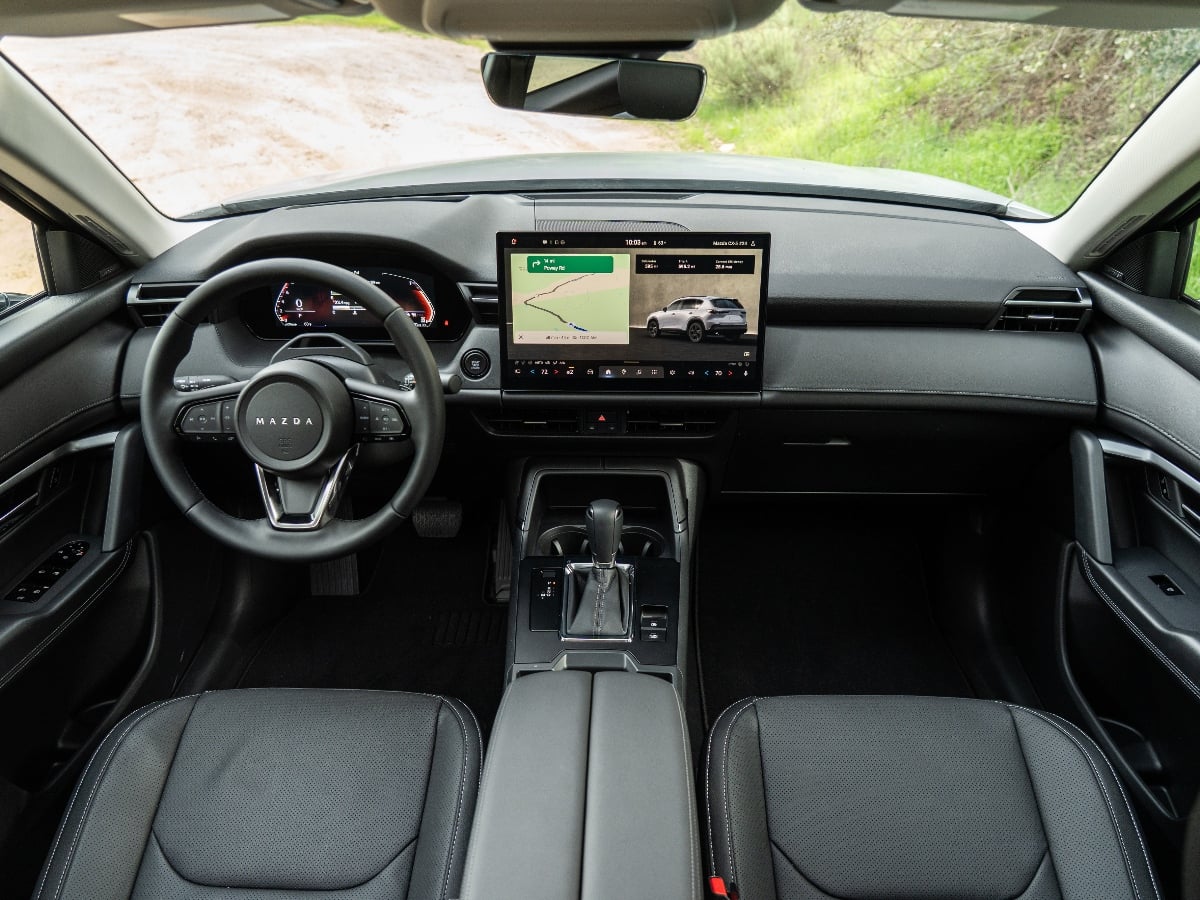
Photo: Tim Stevens
For this newer, larger CX-5, Mazda did not abandon its now-familiar Kodo design language. In fact, the core styling elements are quite similar to those of the previous CX-5. However, everything is subtly refined and refreshed to create a machine that builds on its predecessors' legacy with even greater refinement and sophistication.
The interior, however, is radically different, and your kids or other passengers will appreciate the improved rear seating. The CX-5 gains 0.3 inches of legroom, yet it feels much roomier than before. I stand 6 feet tall, and even with the front seat at a relaxed position, I had enough space in the rear to cross my legs without issue.
The CX-5 is a five-seater, and seating three across is a real possibility. There is even enough headroom for particularly tall passengers, while heated outboard seats on the Premium and Premium Plus trims mean you will not hear any complaints on chilly morning school runs.
Front seats are likewise heated, as is the steering wheel. You also get moderate but effective ventilation in the Premium trim and above. The front seats are quite comfortable and have power adjustment with memory. Overall, the materials on the Premium Plus trim I drove felt good, with a focus on durability and ease of cleaning that parents will particularly appreciate.
They will also appreciate the generous cargo capacity: 33.7 cubic feet behind the rear seats. That is not only up from 30 cubic feet in the previous model, but Mazda has also lowered the opening to the cargo floor and created a wide, flat surface that is easy to load with big, heavy objects.
You have something with more length than heft? The rear seats have a 40/20/40 split, so you can fold the middle section while leaving the outboard seats free and upright. With everything upright, there is room for three in the back, for a total of five passengers.

Photo: Tim Stevens
Reliance on buttons is a major topic of debate in automotive interior design right now. If the new CX-5 is any indication, Mazda is all-in on touchscreens. Compared to the outgoing CX-5, the new model has a radically simplified interface that moves virtually everything to either a 12.9- or 15.6-inch touchscreen, depending on trim.
I was always a fan of Mazda's simple, former interface and its rotary controller, but the new Google-powered interface is a big step forward. Standard features include:
Stepping up to the Select trim adds wireless CarPlay and Android Auto and a wireless smartphone charger. SiriusXM satellite radio is included on the Premium and Premium Plus trims, as is a 12-speaker Bose sound system.
That Google backing means the CX-5's new interface includes many popular apps you can install directly, such as Spotify or Waze. Google Maps is the hallmark app, so finding your way is a breeze. Google Assistant is also here, offering comprehensive voice recognition and search for points of interest in a relatively natural, easy way. You can even control many car functions, like heated seats and temperature, by voice.
It is all so good that you probably will not feel compelled to reach for your phone, but wireless Android Auto and Apple CarPlay are great to have, as is the wireless charging pad found on all but the base trim.
The 12-speaker Bose sound system delivers good sound for this segment. Its only real shortcoming is the absence of a volume knob. If you want to turn up the volume, you need to use the touchscreen, the capacitive touch controls on the steering wheel, or Google Assistant. Having to make spoken requests for more volume is not my idea of an efficient user experience, but Google Assistant is otherwise quite powerful and a great addition.
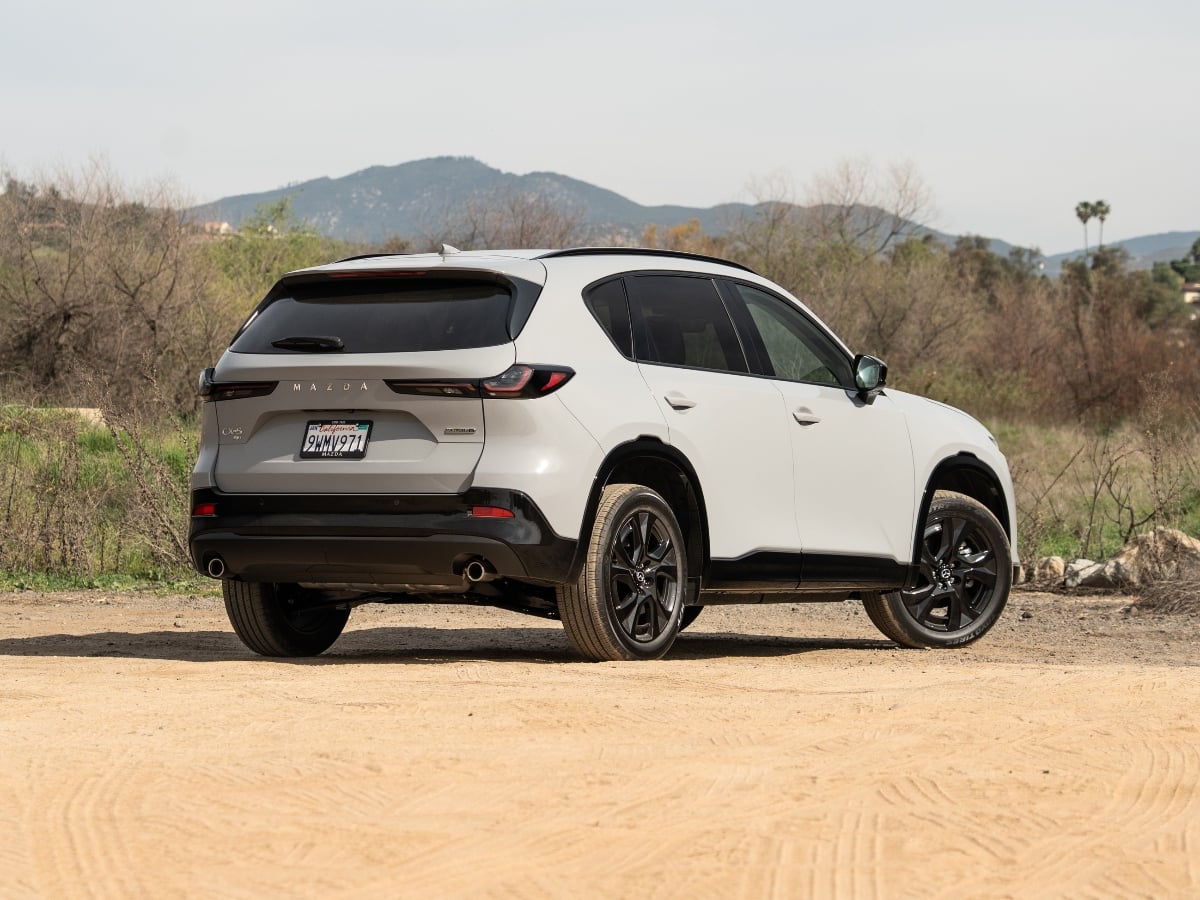
Photo: Tim Stevens
Regardless of which trim you choose, every new 2026 CX-5 is powered by the same 2.5-liter four-cylinder engine paired with a six-speed automatic transmission. It produces 187 horsepower and 186 pound-feet of torque. According to the Environmental Protection Agency (EPA), it is rated at 26 mpg combined. In my testing, which included a mix of highway cruising and canyon carving, I came up short of that, netting just 23.3 mpg.
That engine is probably the weakest link in this driving equation. It feels underpowered and is far from engaging when pushed. A hybrid option would likely improve responsiveness and address the CX-5's lackluster fuel economy, but sadly, one is not yet available for the new CX-5.
Thankfully, the rest of the CX-5's dynamics help make up for the lack of power. This is an SUV that is always been among the most engaging in this category, and that does not change.
The steering is a bit slow, so you will need to turn the wheel quite a bit to get around the corners. Likewise, the brake pedal has a long, soft throw, so you need a firm push before turning in. And of course, you will need to keep your foot on the accelerator to wring the most out of that four-cylinder.
But the chassis has a fundamentally willing, eager feel. It is planted and confidence-inspiring through twisty turns, and it is genuinely fun. Despite that, it never feels harsh or nervous. It tackled bumpy roads without complaint and was perfectly pleasant while idling through traffic.
The CX-5 is no sports car, but it is an SUV that is willing and able if you want to take the twisty route home.
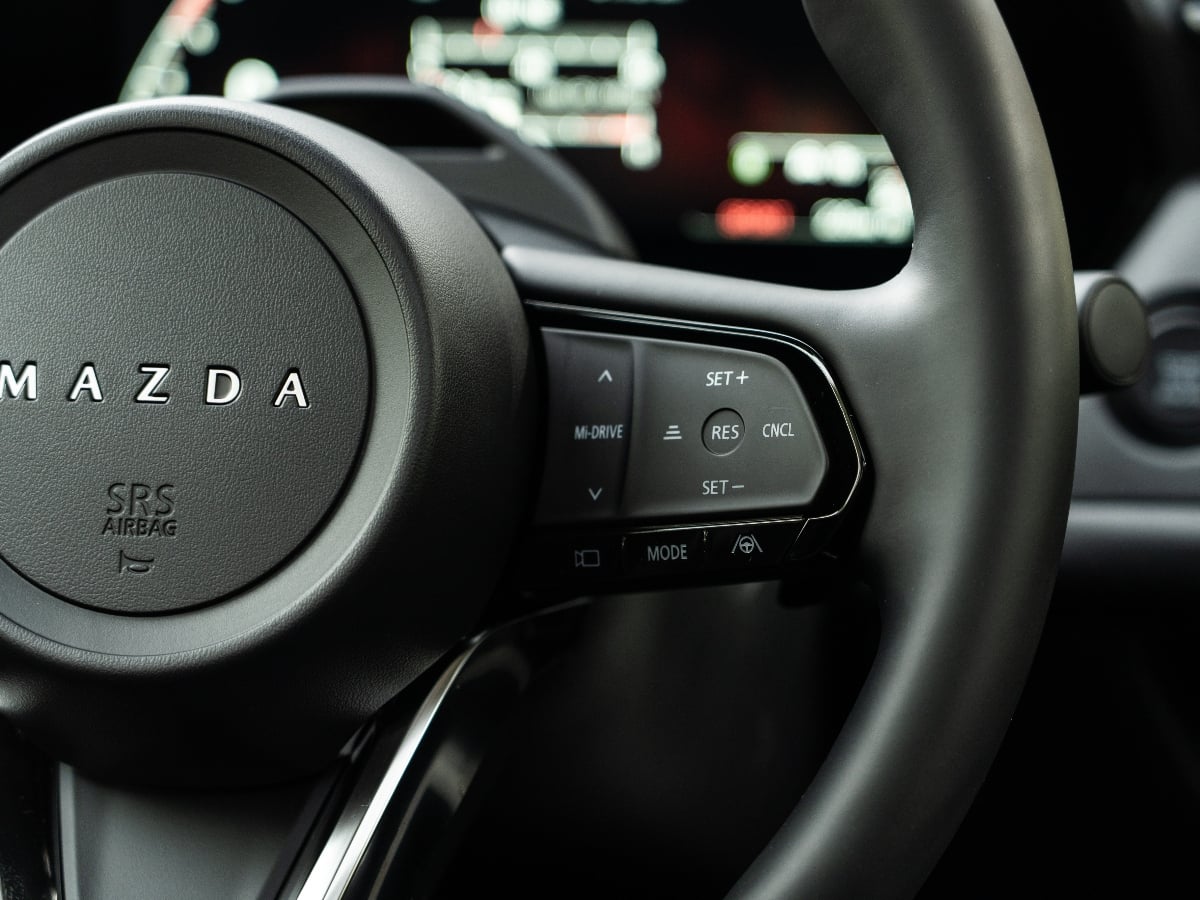
Photo: Tim Stevens
Mazda's safety suite for the 2026 CX-5 includes a comprehensive set of advanced driver assistance systems (ADAS), including:
Step up to the Premium Plus trim, and you also get:
I was generally impressed with the adaptive cruise control. I spent a good portion of my time in Southern California traffic. The SUV modulated its speed without issue and smoothly brought itself to a complete stop when needed, though I had to restart it manually each time.
The lane centering assistance system worked well most of the time but had an unfortunate tendency to follow the right white line whenever approaching a highway exit. That, at least, was easily corrected.
The system also features a lane change assistance system that automatically changes lanes with a touch of the turn signal stalk. This system worked quite well, refusing a lane change when the way was not clear but executing the move quickly enough to claim a gap even in dense traffic.
As of this writing, neither the National Highway Traffic Safety Administration (NHTSA) nor the Insurance Institute for Highway Safety (IIHS) has tested the new CX-5’s crashworthiness.
According to the JD Power 2025 Initial Quality Study (IQS), the Ford Escape ranks highest in the Compact SUV segment. The Jeep Wrangler and the Nissan Rogue are the next highest-ranked models.
According to the JD Power 2025 Automotive Performance, Execution and Layout (APEAL) Study, the Nissan Rogue ranks highest in the Compact SUV segment. The Buick Envision and the Mitsubishi Outlander are the next highest-ranked models.
Other 2026 CX-5 competitors include the Chevrolet Equinox, Honda CR-V, and Toyota RAV4.
Mazda's new CX-5 does not radically change the equation when it comes to the vehicle's previous primary selling points, including excellent drivability and good looks. However, it does offer a significant step forward in interior comfort and technology. The lack of a hybrid option is unfortunate, but the improvements make for an SUV that is hard to ignore, even in this ultra-competitive segment.
Tim Stevens is a veteran automotive and technology journalist with over 25 years of experience covering a wide range of topics, from smartphones to supercars. In addition to jdpower.com, his expert perspectives have appeared in numerous national and international outlets, including print, online, and broadcast television.


The Ford Transit is the automaker’s full-size cargo and passenger van offering, designed to serve a wide range of commercial and lifestyle applications. With 37 available configurations, the platform ...See More
Read the Full Article
The Chevrolet Tahoe is a full-size, three-row SUV with a standard V8 engine and available diesel power. Built on the same platform as the Chevrolet Silverado 1500 pickup, the Tahoe benefits from its ...See More
Read the Full Article
It is the end of the line for the Ford Escape. After 25 years as a fixture of Ford’s lineup, 2026 will be the compact SUV’s last model year.
Read the Full Article
The Colorado is Chevrolet’s midsize pickup. It ranks among the segment’s most capable trucks for payload and towing, and can be configured for both work and off-road adventures. For 2026, the ...See More
Read the Full Article